The main cause
Often, the way we sit, stand and move things around can cause pressure and tension in areas which were not meant to handle these forces. A lot of people’s lifestyle nowadays revolves around activities that require sitting. As it’s well known by now, sitting does not do us a whole lot of good. To make matters worse, more often than not, the ergonomics of the furniture we are using in our day to day lives are not the best suited to properly support us.
If we must be sitting for long periods of time, it’s important to maintain correct posture and take regular breaks in which we move and stretch. These breaks are vital for keeping muscles healthy and preventing them from shortening. Generally, by having a good exercise regimen that involves core strengthening exercises, we can insure the back is not being over-strained. Core strength is a major player in keeping our backs injury-free, transferring energy and controlling movement. For an in-depth look at our core muscles and how we can strengthen them visit the Sports Medicine Section of About.com.

It’s important to understand that not all lower back pain can be improved with exercises. You must always seek medical attention if pain is severe or redness and swelling is occurring in the affected area.
Other signs that are cause for alarm is the pain is coupled with:
- A high temperature
- Unexplained weight loss
- Loss of bladder or bowel control
- Numbness around your genitals buttocks or bowel
- Pain in your chest
- Pain is constant and doesn’t ease after lying down
Similarly, in cases of a slipped disc, injury, or certain spinal deformities, it’s important to discuss treatment with your doctor before attempting anything yourself, even if healing has already occurred.
With warnings aside, a lot of us are suffering from a common case of stiff lower back which is causing discomfort of varying levels. This type of muscular tension can be greatly helped with some simple exercises. Did you know that the majority of pain suffered in the lower back is due to bad posture. Click here to read our blog on bad posture.
5 exercises to help prevent and combat lower back pain
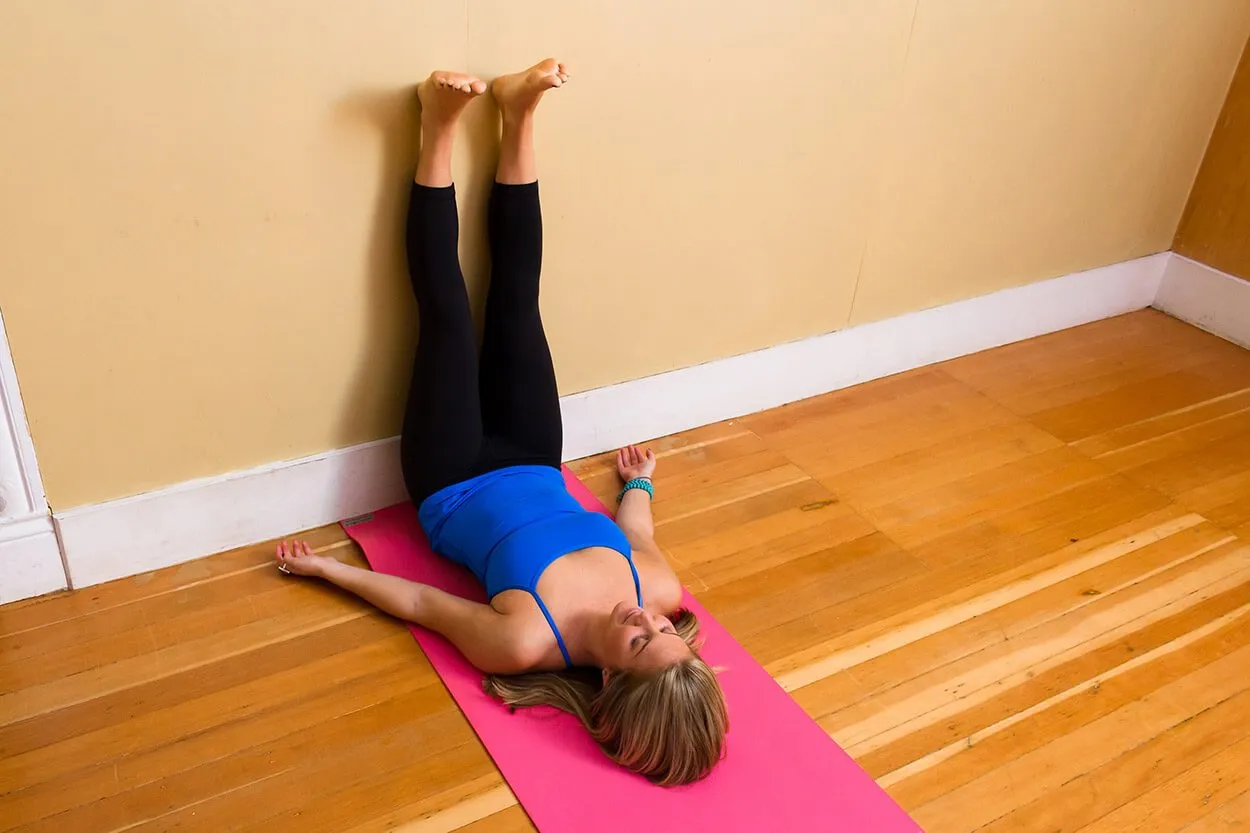
1.) The sky legs
Probably one of the most easiest and relaxing exercises out of the bunch. By simply acquiring this simple position we allow the lumbar muscles to relax and any stagnant fluid to drain from the legs. Your buttocks should be in contact with the base of the wall with your legs straight up.
2.) The cat back
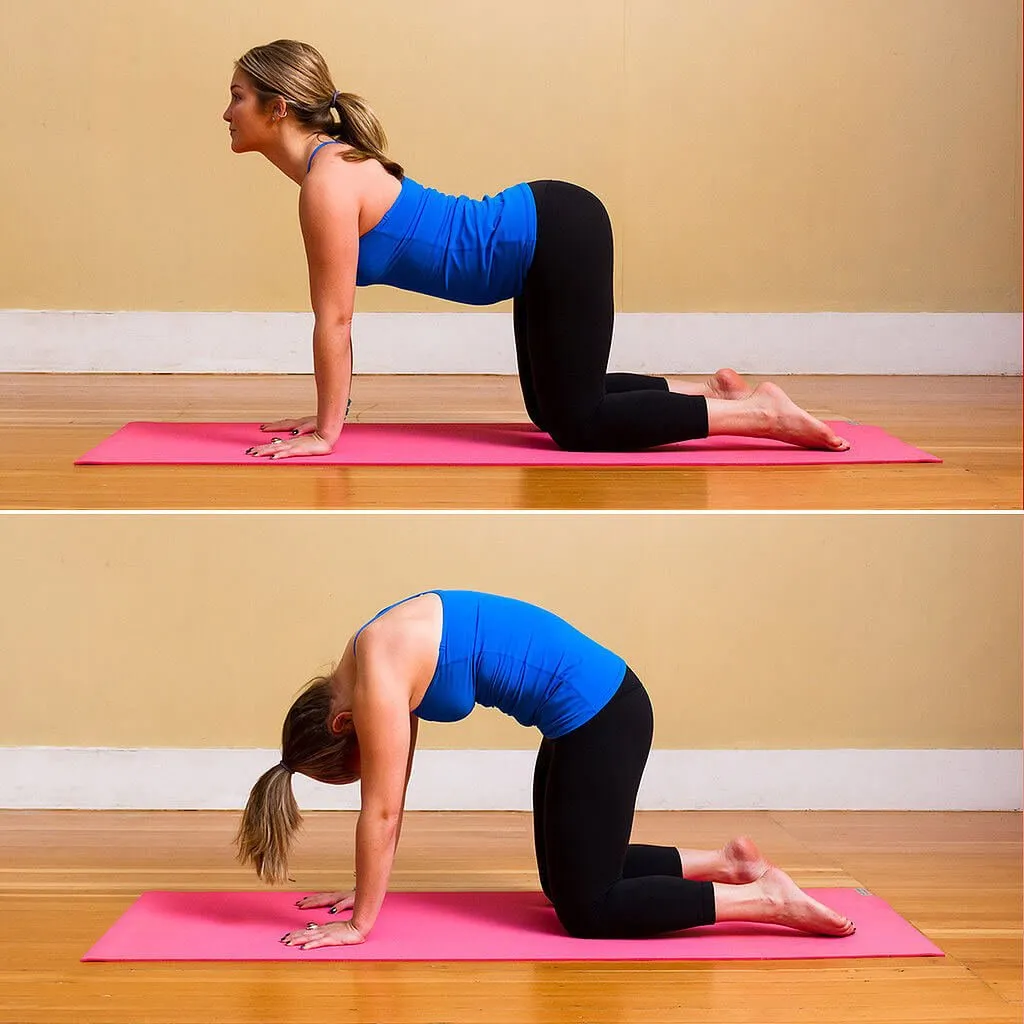
Kneeling on all fours, keep your hands under your shoulders and your knees under your hips. It’s important to take care not to over-arch your back or lock your elbows. Slowly take your buttocks backwards, following the natural curvature of the spine. Breathe deeply and hold the stretch for one full breath before changing position for 10 repetitions.
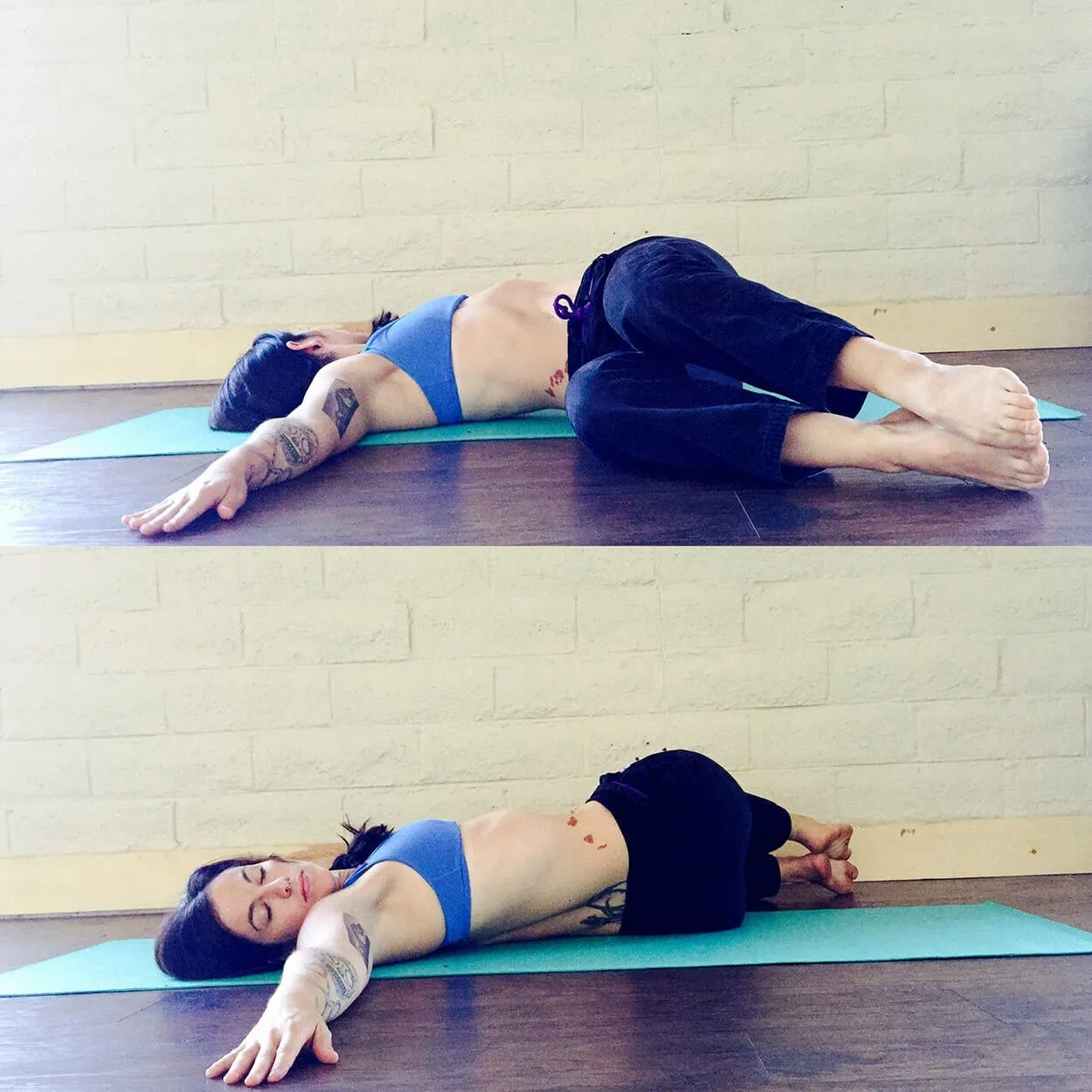
3.) The two-knee twist
Fantastic for spine stretching and mobilising. Place a small cushion under your head to support your neck and a pillow between your knees for added comfort. Knees should be kept together and bent. Keeping your upper body relaxed, roll knees to one side, followed by your pelvis and keeping both shoulders stuck to the floor. Turn your head to rest to the right while your legs are to the left. Breathe deeply and hold stretch for one full breath before changing position. Repeat 10 times.
4.) The Needle & Thread
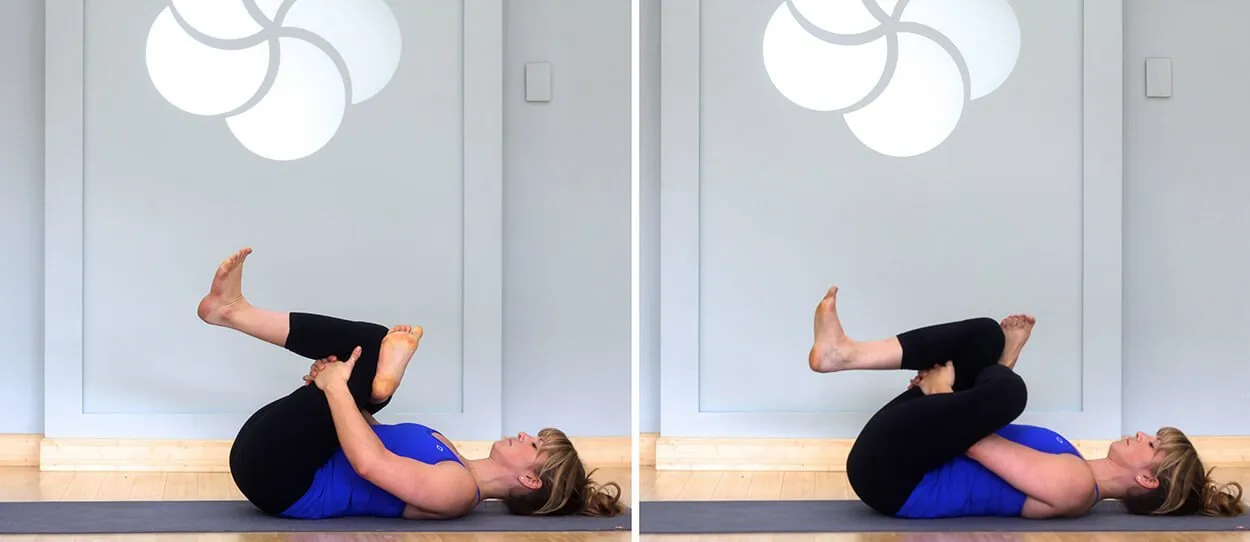
Lying on your back keep neck relaxed and supported with a pillow. Bend one of your legs so that your foot rests on the other thigh. Thread your hands through the space between your legs, interlacing your fingers, gently pulling your bent knee close your chest. Hold the stretch for four deep breathes before switching sides.
5.) The Pelvic Tilt
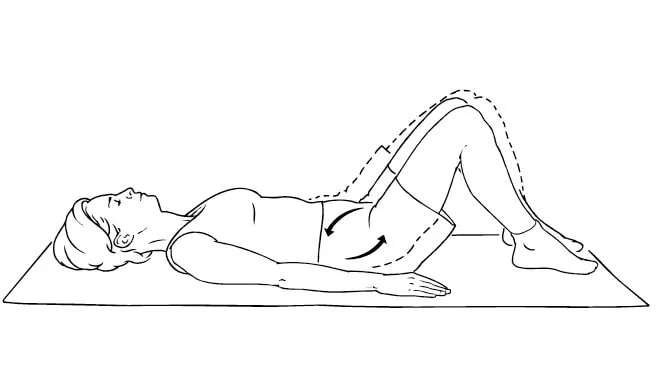
Place a supporting cushion under your head and lie flat on your back. Bend your knees keeping feet straight a hip-width apart. Maintain a relaxed upper body with your chin slightly tucked in. Flatten your lower back into the floor contracting your stomach muscles. Now tilt your pelvis towards your heels until you feel a gentle arch in your lower back. You should feel your back muscles contracting and then return to the starting position. Do 10 repetitions rocking your pelvis back and forth in slow motion. It’s important not to press down through the neck or the feet. This exercise is great for stretching and strengthening your lower back. For pregnant women, a standing pelvic tilt up against a wall might be easier.
Sources: http://www.nhs.uk – http://breakingmuscle.com
Learn More
You can learn more about keeping fit and Yoga exercises, for your own self development or in order to become qualified. You can become a Yoga instructor with our online course and receive an internationally recognised diploma.
Delve into the world of holistic therapies at The School of Natural Health Sciences where there are over 50 courses to choose from. With over 18 years experience in training holistic practitioners, you’re guaranteed world-class training. Enrol today and take advantage of our one-of-a-kind offers!